Trump’s 10% Interest Cap & The Death of the Penny
Episode Summary
Master your money in 2026! We break down Trump’s 10% credit card cap, the 50-year mortgage trap, and how to use a 529 plan to Roth IRA rollover to build generational wealth tax-free.
In this episode of Red, White and Green, Ted Jenkin and Southside Steve Rickman go beyond the headlines to explain how money actually works in today's economy. We analyze the real-world impact of the new credit card interest rate caps and why the "affordability" of a 50-year mortgage is actually a massive debt trap. You’ll also learn the "They Didn't Teach You This" secrets of college savings and how to roll unused 529 funds into a Roth IRA.
Later, we enter The Green Room with Chris Lalomia of The Trusted Toolbox to discuss the gritty side of entrepreneurship and building a multi-million dollar business. Finally, don't miss our Money Hacks segment for a Chick-fil-A trick that saves your family money every single visit.
Connect with Chris:
Athens Division: thetrustedtoolbox-athens.com
LinkedIn: Chris Lalomia
Instagram: @chris.lalomia
Facebook: Christopher Lalomia
Chris's Book
FROM ZOO TO THE WILD Your Guide to Entrepreneurial Freedom and Wealth. Order on Amazon: <a href="https://www.amazon.com" rel="nofollow noopener noreferrer" target="_blank">amazon.com
Smarter business moves. Better money decisions. Bigger goals.
Ted's Media HubHey everybody, I'm Ted Jenin and welcome to this week's episode of Red, White, and Green, where we give financial advice to people who love America. I love money and I love America. So, both of those are good things today. But of course, we're teaching you every week about what happens with capitalism in
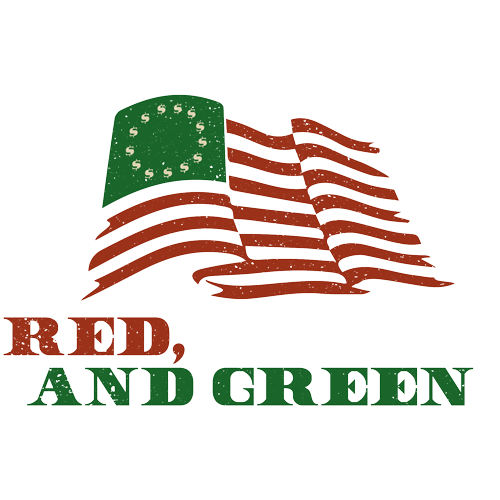
this world. It's the flag of the red, white, and green. We got rid of Betsy Ross. We took out those 13 stars. We put in 13 dollar signs and it's green. That's where the red, white, and green comes from. And every week, we're going to bring you some great content. We're going to do a little news that you can
use and some headlines and stories. This week, we're going to teach you about the ABCs of 529s. A lot of people asking us about how 529's work and college education. We've got an interview with Steve and I doing this with Chris LaMia.
>> LaMia >> of the Trusted Toolbox. And of course, we got the segment called Get the Green Living in Atlanta. We're going to teach you something about Chick-fil-A that you're going to want to know the next time that you go through the drive-thru.
Of course, every week I'm with my co-host here, Southside Stephen Rickman, an entrepreneur himself. >> I very much am. Uh I've had a few businesses and I'm learning, always learning, and hopefully now we're teaching. And I love money. I like I like it. I got to tell you, my favorite
color is blue, but you have turned me. I'm now green. >> Green. green is now my favorite color and I look at the flag and I'm like that should be red, white, and green. So, I really think we're on to something and uh I dig the dollar signs over the stars.
>> Do you think we got JIP? Because we didn't get that last name, the LaMia. LaMia maybe. I mean, Jenin Rickman, they're pretty decent names, but LaMia has got a little flash to it. But you're going to love this guy cuz he's self-made and uh he's doing exactly what we're hope you're wanting to do.
>> Well, we love it. And every week we want to talk to you a little bit in the beginning here about some of America's money headlines, how Steve and I see it, how it's going to impact the news that you can use that can make it down in your wallet. And one of the things I wanted to open up with, Steve, which is
very interesting. >> Now, we're not political, but President Trump does say a lot of stuff. >> He does. And this week, when you talk about one guy moving stocks, he basically came out and said, "I want to have a a 10% credit card cap on all credit cards immediately." Dude, I heard
that and I was like, "Now, that's a great idea." And I think that's an idea that all of America can agree on because there's a lot of people in credit card debt and the interest rates, regardless of your credit, are so high. We've talked about it. 10% would be huge.
>> Yeah. I'm going to say it's the worst idea I ever heard. >> I thought it was great. And he even did the hand. Listen, here's what Steve's not wrong about. He's not wrong that in in principle, in theory, there are a lot of struggling Americans. So, it's like, how do we help them? We're going to get
rates to 10% and cap it off. So, I get it. I do get it. >> This helps them get out of debt. Hopefully, they can >> here's the problem.
>> You're killing free will. >> You're killing free market enterprise. Now, there are already state usery laws and things that say how high an interest rate can be on things like credit cards.
So, let's say in the state of Georgia it's 30%. It says you can cap interest rates at 30%. And the issue is what people aren't thinking about when they hear that is if I got to loan money to a guy that's got a 450 credit score, right? A guy that basically it's a choice between my credit card and the
pawn shop. He's throwing down his old watch, maybe some guns and other stuff like that. >> Is that is that really what free market enterprise is about? So, what I would say is why don't you make the Trump credit card? Just do it at 10% and see if you can run that business. You know
why he won't? Because you can't run that business at 10%. You can't. You can't do it because you'd only be giving credit to who? The damn the damn people that would be able to pay you back, right?
>> How about people with good credit get 10%. >> Well, no. I Well, I listen, some of that happens today because the FICO score, this is teaching you about this. The FICO score today is at 20 point bands.
So if you're a 620 to 640 and you get an auto loan or a mortgage, but most people see mortgage rates, Steve, they think the mortgage rate is the mortgage rate. It's not.
>> Your credit score affects your mortgage rate. Your credit score affects auto loan rates. So, and by the way, to a degree, it affects your credit card uh interest rates. So, in theory, what he's talking about is is interesting. But when you look at capitalism, this is what if you own a credit card company,
what would you be thinking? >> That sucks. >> You're gonna tell me how to run my business? >> Yeah. Well, that as well. Say, "Yeah, this is no, this is how I do it. I have overhead. I have payroll. We have got to get this interest in order to do what we
do." >> What if we told uh Chris at Follow-Up Media that, hey, look, you can't charge more than 75 bucks an hour because that's that's the cap right now. You got to give a cap to people that don't have enough money to start a podcast.
>> Well, considering we use him, wouldn't that be beneficial to us? >> It would. It would. But you know, I just wanted to share with everybody that sometimes you hear these things and they sound good. And this brings me to headline number two. I call it the 5100.
You know what that is, Steve? >> No, I just know 5150. >> Oh, it's a great It's great. And I'm a Van Hagar, not a Van Halen, but I also know it's for it's the code for insanity.
>> Oh, is it on 5150? >> 5150 means you're insane. >> Well, that makes sense for them. Yeah, >> that makes sense. Listen, here's the 5100. And this is very interesting.
They have talked about number one and it is in place right now a 100month loan for a car. I want that to sink in for everybody. A 100 month loan on a car that's 8 and a half years for a loan on a car. Does that make sense?
>> Not at all to me because most people after five or six years when the warranties, the factory warranties are gone, you start having issues with the vehicle and to be making a big payment on a vehicle that's giving you trouble doesn't make sense.
>> That's exactly right. And Steve, the thing is a lot of people trade their cars in in that 6 to 8year range. And often if they've got a loan and then you've got an upside down pineapple cake, meaning you know, you got a loan, you got a depreciated car, and then it's going to be even harder to get into a
new car. And with new car prices at 50,000 now on average and going up, you're going to put people further and further into debt because you know why they want to do it? Because it makes people feel good. Because when you walk into the car dealerships and they say, "Let me ask you a question. How much
money can you uh pay on a monthly basis?" >> They're going to give you a number. They're going to give you three, four, 500 or 800.
>> Right. Well, if I know this and I'm like some car salesman guy and now I know I can't do fiveyear loans anymore and I could do a an eight and a halfyear loan, I'll be like, "Steve, at 300 a month, you could afford a $76,000 car." >> Yeah.
>> You're going to be paying for it for the rest of your goddamn life. But, you know, that's you know, that's what it is. Listen, Ryan, Judy, I know that right now times are tough and you never thought you could own an automobile like the one behind me, the Limited, but you can because we're going to do this for
100 months and the payment fits perfectly and you're going to drive out in that vehicle today. What do you say? >> I know, Steve. I'm not a car guy, but but here here's what I would say to everybody. I got an idea for you. You give me a hundred grand and I'll I'll guarantee you in five to six years it's
worth 50 grand. You want me to invest your money? M. No. >> Well, you just did it. You just did it. You paid 100 grand and that 100 grand in five to six years could be worth 50 grand.
>> Wow. >> Right. But people, but I look good, man. It's my Bronco. I got this. I got the M. Now, Steve, the other side of this is they're talking about the 50 piece, which is a 50year mortgage.
>> A 50year mortgage. >> Again, and I thought 30 years was a long time. >> If you took a 50-year mortgage out, would you be alive to pay it off?
>> No. No. It would absolutely be impossible. And I know God loves me, but I don't think he's going to let me live to 110. >> Steve, if you took it out and you're 30 years old, it mean you pay off your mortgage when you're 80. That's crazy.
>> When you're 80. >> Why would anyone unless you just don't plan on what are they planning? What are they thinking when they hear that? We're just going to sell it. The house will be worth >> Not even. See, the idea behind this is that houses have become so out of
control in terms of price, right? >> We need a way to be able to help people get into them. So, the easy solution is to say if it's not a 30-year mortgage and it's a 50-year mortgage, you're going to be able to afford the payment now, but it's hundreds of thousands of dollars of more interest. And you know,
the real idea, by the way, behind a 30-year mortgage was that if you got a house when you're 25, 30, 30, by the time you retire at 60, 65 years old, you don't have a mortgage payment. Every time people do this and they refinance, you forget when you refinance, you got another 30 years,
>> right? And people don't factor that in and that's where I see them get obliterated in in retirement. >> It's a shame. >> So, I thought that was pretty interesting. I got one more story for you which I thought is pretty interesting. As you know, we have
officially gotten rid of the penny. >> Yes, I knew that. And it's almost sad. Uh, you know, I was like, but I don't carry pennies. Nobody does. My kids aren't even into pennies.
>> My question is 10 years from now, will people still use the phrase, I'm pinching pennies? >> Yes, they will. I think they will even though they don't exist. Uh I think there's something about the penny, you know, and I don't know. It's kind of cool. But didn't the penny cost more to
make than it's worth? >> Will we be? >> Will we be saying we're pinching nickels soon? >> Uh we're going to pinch quarters. I think people were talking about like maybe even the quarter the nickel and the dime should go away. Maybe we just
do half dollars. >> Here are the facts. The fact is you're exactly right. It cost us about four cents to make one cent. >> It's too much. Yeah.
>> That don't that don't make any sense. Four cents. The nickel though is more expensive. Bigger bigger coin. >> Bigger coin. Obviously not made out of nickel anymore, but still with the metal that goes into it, it cost 13.8 cents to make a 5-cent coin.
>> That's got to go too. This all makes sense. I know this. >> The dime is profitable. >> It's a tiny little coin. It's a thin little coin. You can make it. You can make it for like 9 cents.
>> God, you're still getting >> So the nickel's going to go. >> Nickel's gone. >> Yeah. >> Soon. You think the dime will go or you think there >> I think they'll all go. It's not like people are coming around at Halloween
with the UNICEF box like we used to have as kids putting coins in there, right? >> No, you're right. It >> ain't that way anymore. No. >> Get rid of your coins. They're all They're all going away. In 25 years, this is all digital. You'll be lucky you have paper money in your wallet. It's
all going to be digital. >> I think it's going away, too. You're right. I think quicker than than we think. >> All right. Well, uh I hope you enjoyed some of that. That's Steve. I learned something, man, cuz I really thought 10% was a good deal when I first heard it,
but I like and I think anyone should be prepared to take a step back and listen. You got to listen to learn. And now it makes perfect sense. And 50year loans. Oh my god. So that was uh this week's sort of news that you can use. We bring you the money headlines, try to bring them quick and fast to you, give you
some ideas to think about and how this affects capitalism in America. And every week, Steve, what I love to do for for our listeners, and you're gonna like this because you got young kids, and I think you've done some of this already.
>> I have. >> But I like doing a segment called They Didn't Teach You This cuz what I find is that we have more educated derelicts in this world than I've ever seen before.
People have gone to college and get an MBA. They still don't have any damn idea how these things work. And I don't blame them. They're complicated. So, we're trying to break this stuff down. And I thought I'd talk about the ABCs of 529s.
See, I knew that's where you were going because you teased it at the beginning of show and it made me feel good because I do have 529s and I started them the second my kids were born. I had a I had a figure that made sense to me and our family and every month I deposit into the 529 program.
>> Right. So, what what really is the 529 today? It's sort of the modern-day version of of how to save for college. >> That is the way they bill it. And and I have questions too that I'm like, "What if your kid goes to trade school or doesn't go to college? Where's that money go?
>> Oh, it can be used for that. >> Oh, good. >> Yeah, for that. Well, they changed the program. It used to be a college only program. Yeah.
>> And now there are caps on it, but you can actually use the money for K through 12. >> That's great. >> So, it becomes a very universal vehicle, right? You know, it could be used for K through 12. It could be used for college. It could be used for grad
school or M's programs. But generally speaking, the way the vehicle was designed is that you put in money today. Mhm. >> Depending upon the state that you live in, Steve, you might get a state income tax deduction.
>> So, you got to be very careful that there are salespeople out there that try to make a commission or whatnot until you use this product, but you really need to look at the ones that are in your state.
>> Okay? >> Examples in the state of Florida, they have a prepaid tuition program. So, if your kid goes in school, the 529 keeps up with the cost of college based upon where you put in the money today. In the state of Georgia, every child gets an $8,000 state income tax deduction when
you put money in there. So, every state is different. >> Well, at least the state I'm in sounds pretty good. >> Oh, I think it's a be Georgia's got a hell of a plan.
>> No, that that's excellent because a lot of people aren't sure about this and I'm glad that we break this down on the uh Red, White, and Green show because the simplest things I think people are almost embarrassed to ask.
>> Yeah. Well, I think a lot of people don't understand, Steve. All the money that you put in grows tax deferred, right? >> Just like it does in your 401k. No taxes while it's growing. And then when the money comes out for what they call to be qualified expenses. That's not just
tuition. We're talking about fees, computers, and related technology, books and supplies, room and board. It all comes out taxfree. >> That's awesome. It's a great program.
>> Oh, a tremendous program. >> So, so to not do it would almost be a mistake. Is it just something that every parent and I don't know if it's a certain amount, but just to do something to give your kid a leg up when that time comes, it's just a little bit at a time.
So, I I think any anything you put in, it's good. >> So, here are some of the myths out there, Steve. Like, let's say you save for one of your kids and you ask a question, they go, "Well, they don't go to college. They decide they just want to go to work or they don't use the
money." Mhm. >> You can change the beneficiary on any plan to anybody in what I call to be a West Virginia descendant line. I don't I don't mean that personally, but you know, anybody that's in the line >> immediate family or >> it's more than that. It's more than
that. Like the definition is like step brother, step, it can go to a lot of people. But meaning if I had 10 grand in one kid's account, an older kid, and five grand in a younger kid's account, and that child did not use that 10 grand, I can move that money to my younger child, and now they have $15,000
to use for their college education. No penalties, no fees, no taxes. So, a lot of people don't realize you can move it. So, like, if I had money saved for my kids and one day I had grandkids, I could I could change that and just give it to the grandkids down the road.
>> All right. Now you've taught me something. I should not let my kids know I have this program because they might fight over it and the older kids might go, "No, that was my money." And you're like, "No, you didn't go to college." So just keep it a secret. All of a sudden, you have some money for them when they
need it. >> Well, it is the beauty about it that the older college plans, you used to lose control when your child hit the age of majority in a state. Like if they were 18 or 21, it became their money.
>> This money is always your money because you're the person that put it in there. So your kid ends up becoming a you know what. >> Mhm.
>> A boss hole. Uh >> boss, that's a new term. >> You know, the reality is that that you could take the money back from them. You can actually take it out. There is a little bit of a penalty to take money out on the growth of the account, but still you're always in control of the
money. That's good stuff. >> Yeah. So I I think that these things, but the the rules changed, Steve, recently, which became made this thing go into like hypers speed. And the way that the rules change is it said if your child doesn't use the money for college, a certain amount of that money in the
529 can be rolled over tax-free into a Roth IRA. >> Oh man. >> And we'll get on a show to talk about Roth IRA and such, but thinking about this.
>> Great. >> You put money away for college, they didn't use it all. Imagine they graduated college. There's 20 grand left over. And you're saying, "This money was really intended for my kid, but I don't want them to get the money now and spend it, do something dumb, go to Europe,
whatever it may be." >> Backpack with Susie. No, >> it might be fun, but >> maybe Suz's hot, but we're not do you're not doing it.
>> But Steve, they can take that money and you can roll it into a Roth IRA and now you're setting your kid up for retirement. >> Dude, that's strong. I mean, that's a good parent.
>> That's right. That's right. >> That's what my wife tells me I have to do. I have to be a good parent. I'm like, "No, I can keep the money." But she's like, "No." Well, by doing a 529 alone, you you've gotten to be a decent parent. You know, we we can't talk about the belt and the beatings and stuff like
that. >> No, I'm an old school 70s guy. You know, things happen. >> Things happen. I would tell most people that, you know, the 529 plan is really a misunderstood uh plan, Steve. You know, and and a lot of people will always ask me, you know, how much should I put in
one of these accounts? And the reality is you put as much away as you can because now you've learned in this world of capitalism and advice that people love in America that it can be used for a lot more >> than just that college education. And that's where people get messed up. By
the way, one thing for grandma and grandpa, almost all these plans have a nice little button called gift. So, don't be asking grandma and grandpa to buy a whole bunch of gifts, whether it's under the tree, whatever it is that you celebrate or give them stupid gift cards that your kids are going to go spend
more money. Hit the gift button and have them put that gift into the 529 plan. That's the best gift that they can give. >> Oh, I know it. I've got several ants on that program. My mom continues to buy my kids this year dinosaurs. I'm like, they don't need more toys. They need college money.
>> That's right. put the 50 bucks in the plan and uh get rid of the Lincoln Logs and the uh the dinosaur. >> The Lincoln Logs were fun. They're gone. You love the Lincoln Log.
>> I did. I like old school toys. I'm playing Trouble currently with my kids now. Popping the button. Popping the button. >> Did you play Atari, too, as a kid?
>> Didn't do Atari. I did PlayStation. >> PlayStation. >> The kid next door had in television. PlayStation was actually a little more up to date. So, I'd go over and play Atari with him. He'd come over to my house and play PlayStation. Yeah.
>> But I started out with Pong. Pong. Yeah, that was a great game, right? You just go to channel three on your TV. It would basically you had to go from like channel four to channel three on the back.
>> Hit the switch on the back. You get to play Pong. We were all excited about it. >> First Atari game I played was Combat. >> Yeah, that's a good one. The Tank >> Combat was a great game. Now, we won't say it on this show, but y'all look this up on the internet. A lot of people don't know that Atari in the early days
also made it made X-rated video games. >> Did not. No. Yeah, >> they did. You don't want me to tell you what the one was called, do you? >> Yeah, I I actually I do.
>> Gosh, I really don't. This is not what this show is supposed to be all about. But we're even a low point. >> They made a lot of money, Steve, selling. You remember the game Kaboom?
Yeah. >> Did you ever see Kaboom? Yeah. Well, Atari had two joysticks. They had the regular joystick and then they had the throttle one that you would turn like this. They did have a game called Beat them and eat them.
>> That was it. I can't make this up. You can look it up on the internet. I'm not even going to say, Steve. It's so vulgar. for a 70. >> I can't say what what it was a wild time and some dude came up with that and they sold millions of dollars of an X-rated game.
>> When you see the graphic, Steve, I'm just going to say to you this. It's >> block block breast. >> No, it's not even that. It's basically a guy's just a head. Okay.
>> And then a thing. >> A head and a thing on a building. >> Oh, no. No. >> And then the women at the bottom of the building.
>> Look it up. It has to be true or he wouldn't have said it. >> I wouldn't I don't lie on this show. I'm going to tell you this. When you look it up, you're going to be disgusted by it.
But >> yeah, >> I don't know how we got >> or it's a good funny story. >> That's this week's segment of They didn't teach you this. And every week what I've told you when you watch the Red, White, and Green show, we're going
to be talking to entrepreneurs across America, the real capitalists, the people that are out there hiring jobs and making money every single day. And this is going to be this week's segment of the green room.
>> Yeah. Come on. And I got to tell you with me right now is Mr. You look like tool time, but you're the trusted toolbox. But you're no toolbox. >> No toolbox, baby.
>> You're not Chris. And it's Chris L. Say it for me one time. >> Laia. >> LaMia. Chris obviously is Italian. >> That's right.
>> No, that's fine. And you're beautiful. And your wife's beautiful. I have met Chris's wife and she's a beautiful Italian woman. >> That's right.
>> Yeah. Um, I just don't know if she's a happy woman. We're going to get into it because >> you are an entrepreneur. >> I am.
>> And you're a guy that stuck your neck out and you started in the corporate world like a lot of us. But I got to tell you, I'm going to ask you some tough questions. But Ted Jenin has a question just to kick it off for you.
>> All right. Hit me. >> Yeah. Listen, the most thing I'm curious about is how'd you make your first million? How did you make your first million dollars? Like as an entrepreneur?
>> So, as an entrepreneur, uh, that's the that's the next one. So, I left the corporate world and started out and here we go. I uh came up with an idea and a fragmented market and came up with a handyman concept here in Atlanta. And now I've grown it to where I'm I've got 32 employees here in Atlanta. I've got a
division up in Athens, Georgia, which is about an hour and a half away from Atlanta. Uh and that's how I did it. Uh did it by fitting a need or seeing a need and going there and fitting it with a I think a great idea. My guys are all professional. Kind of put a professional spin on what's traditionally an
unprofessional space. And as I told people, I made my millions $80 at a time. >> That's That's awesome, man. I mean, that is cool because you know what? So, what if you have to go deposit a lot now? You can do it online with your phone.
>> That's right. >> But back in the day, I bet you were always at the bank. Hey, it's me depositing again. >> That's right.
>> There was We're We're doing checks every every single day. >> A lot of checks. A lot of checks. My question for you, um, because I think this is true for anybody out there that's trying to do it themselves. What drove you to this? In other words, my thing would be like, you're in the
corporate world. We were all told, start in the corporate world. You need an HSA. You need to have taxes taken out on your checks. You need a kind of a debt. You need somebody that's going to take care of you and and maybe you get a gold watch in 30 years. But it's not the case. It's not the case. I mean, I had
that job. I mean, I had 400 people working for me. Mercedes, uh, you know, my suits. I was in the banking world. But the thing that really drove me there was that when I was 60 years old, I want to go, I wonder if I could actually do and go pursue that happiness, you know, be that guy who could actually start his
own business. And I felt like uh I had the chops. I felt like I could do it. Um but you hear, you know, what one out of 10 companies actually make it. And I was like, you know what? I'm going to bet on myself. I don't want to have somebody else deciding what I can make or if I should have a job or should I not be
able there. And you I think in the corporate world a lot of times people think you're secure, but you know what? You're just one bad boss away from getting fired.
>> How did you deal with the people when you left with corporate America who were the doubters that basically said, "Dude, you're crazy. You're walking away from a job making hundreds of thousands of dollars. You got family security. Why go risk it all to go do this?" >> Yeah, I had a lot of those. I mean, when
I I actually uh gave my notice on April 2nd because I don't want anybody to think it was an April foolish joke. And I can't tell you how many people and I thought they would kick me right out, but uh they had me stay on because I had to take care of a few things and actually was an amicable uh go if you
but I had a lot of people come up to me and go, "Man, why are you doing this?" And then, "Hey, I wish I could do this." And I'm like, "Do you really wish you could do this?" Because that means you're giving up your 401k, you're giving up your cubicle, you're giving up your uh HSA, you're giving up the people
paying for your healthcare. Do you really want to do this? Cuz um it's hard. I mean, everybody thinks it's easy to go do this. And I I'm I can promise you I started in 2008. You don't remember when that was?
>> Oh, I remember. >> That was the recession time. Nobody said it was coming, but I decided to start it anyway. And >> I opened a bar in 2008 that was worth >> Yeah. Come on.
>> Yeah, come on. Yeah. The bar, Southside Steves, and it was a Smoking the Bandit Tribute Bar. But I opened it, which is awesome. Awesome. Uh I'll tell you, I opened it and the property was worth 1.4. Literally, the bank's like, "Yeah, your property is worth 620 at best now." >> And I'm like, What?
>> The payment's the same. >> That's right. >> So, it's brutal. Uh, yeah. So, the timing is everything. Your timing was poor.
>> My timing was horrible. I s say if you ask me about timing, my timing sucks. >> Yeah, if we're allowed to say that. >> And and Ted, you didn't see but I saw his attractive wife cuz I did your your podcast. You have a podcast?
>> I do. Yeah. The small business safari trying to help small business owners get out of the dold rooms, get out of it, and see if they can do it. And if you're thinking about starting one, I try to give you all those lessons I learned or get people on that I wish I had all this information when I started in08. U
probably eyes wide open. I don't know if I would have done it, but uh it gets the naive out of there. And you get to hear some real world gritty advice. >> But his wife came downstairs and I'm making jokes and I'm like, you know, what do you think of the all this? She goes, I don't like it. I mean, I could
tell you and I'm sorry. Was that too personal? >> No, you're right. She watching 100%. It's 100% she did. >> I am a stirer. Um, but my wife doesn't like it either. She almost thinks it's crazy talk. They want that job. They want to see a paycheck. They want to
know that there's benefits coming. They get scared. They do. >> You can do it yourself. >> Yeah, it it's it was definitely been a strain on my relationship with my wife.
And uh yeah, she was like, "Well, wait a minute. You're giving up all this to do that?" At least I had a plan. That's one thing I I came in. I said, "That's it. I'm done." This is in 2006 in November.
And she said, "Whoa, whoa, whoa, whoa. You better have a plan, man." I was like, "You're right." And so I actually worked on the plan before I even launched it and that's why I launched in 2008. But I mean even today she's like well well how much are we making? I'm like well
>> god I hate that question. >> And I said well that's a loaded question. Who's asking? >> I do. Ted laugh because Ted is is is 20 years down the road. How did you stay motivated and what is your advice to somebody watching this? Cuz motivation is key and it looks like a lot of young
people don't have that. They they think it comes easy and it doesn't. I think it starts with the word passion, you know, and passion comes from pain, you know, if you go back and look at the root of the word because there are a lot of times where I felt like I was going to shut this down. I mean, I started in the
recession. I mean, it sucked, you know. I'm hearing a year and a half into it. I'm like, man, people should have been, you know, knocking my doors down because I'm feeling a great need for people and people were holding on to their money and it was tough. What's the dirty, grimy part of entrepreneurship that
people don't see? Because I love capitalism. It's all part of this show and being able to get up every day and make as much as you want to make in life. But at the same token, there's a lot of stuff that when you peel the curtain back, people don't see it all the time. So to you and having had this
great business the last 17, 18 years. What What's the dirty, grimy part about entrepreneurship that people don't see? >> I'll tell you the story. I've been at this for 17 and a half years and I've never missed payroll. Now >> that's to not miss payroll. One day I had to drive out at 4:00 in the
afternoon to pick up a check from a lady. So I had to drive 10 miles in Atlanta, which is an hour, right? Uh I drove out there knowing what my payroll liability is going to be the next morning. I got there. Uh she uh wasn't there. I had to wait for her. I asked her if I She said, "Well, you can just
go on." I'm like, "No, I'll wait for you." Not, you know, I didn't want to tell her, "Hey, if I don't get this $4,000 check, I'm not making payroll tomorrow." She got me the check at 4:15.
Bank closes at 4:30. I got there at 4:28. I'm knocking on the door, running in there. depositing the check. Everybody got paid the next day. >> Wow. That's what it's all about.
>> That is me. >> And you did it. And I bet your wife's like, "It'll be okay." No, it won't because you made a promise to them and they have to have faith in you. That's right. Cuz you know what? It's funny enough, people don't like working for free.
>> I wanted to entrepreneurs, we work for free a lot before we make money. >> That's right. I tell people I said at the beginning, I ran a lot of nonprofit. You did. You had to run nonprofit company. I'm like, "Yeah, it's called the trusted tool." No. And I will tell you, I called him. I was having an issue
and I called you because I've been a client and you actually walked me through it. There was no charge, but it's almost like you have a handyman on speed dial and if he can't walk you through it, then he'll come see you. But your pricing, you're not the most expensive, nor are you the lowest.
You're kind of right in the middle. >> I feel like we're right in the middle. I mean, we wouldn't be uh at this for 17 years and have over 17,000 clients here in the Atlanta area strong without doing it. Uh, and getting 40% of our people to come back tells us that we got a good value play at what we do because we're
upfront with our pricing. Uh, we'll either look at it, we can work time and materials, but people really love our day rate when we come out there and just knock a whole bunch of stuff out. And I tell you what I say, people really like it, the ladies, they love it, and the w the men love that they can go out and
play golf on Saturday and not have to worry about uh stuff around the house. >> Well, it is the green room with the red, white, and green show live from the green room. Thank you for your time, Chris. It's the trusted toolbox. Trust them.
>> Hey, so you uh you just listened to uh Chris Laia. >> Laia. >> Uh this uh episode of the green room and every week right here on Red, White, and Green, we bring you money hacks. And it's time for you to get the green.
>> I love the green, >> Steve. I'm I'm wealthy. >> I know. >> But but I I say this to you, but >> your cologne you gave me last Christmas.
that >> we're free and he put my name on the bottle. >> I'm incredibly frugal at still trying to find deals like how I made my money in part and this is part of capitalism unless ask any entrepreneur that you talk to.
>> You bootstrap this together when you start a company, right? You're trying to figure out every way to build it, figure out how to hire people at a cheaper cost, figure out where you can get parts, supplies, whatever. And you know, and then you loosen up a little bit, you know, as you make some money over time.
But there isn't anybody in America who doesn't love a deal. The question is how to find them. >> In Atlanta, and I think in the country, the best fast food restaurant is Chick-fil-A.
>> 100%. I actually did a post yesterday. I was in line. They couldn't get my order right at McDonald's. The only reason I went to McDonald's, no offense, because I started eating there as a kid. I played on your playgrounds. I mean, I did, but they they couldn't do the special order and they sent me off to
the side. And I said to myself, this wouldn't happen at Chick-fil-A. It just wouldn't. Well, listen, when they had CO, I mean, they could have taught the army something. They you basically go to Chick-fil-A. They like a week after CO came out, they had 10 kids out there and masks and they had iPads and they were
rolling people through it. And I saw other fast food places that had nothing. They were empty. Chick-fil-A in Atlanta here was full. But it's not always cheap. You know, six days a week you got to charge a little bit more so you can make money like you're working it in seven. And today what I want to tell
people is that you go buy a Chick-fil-A sandwich on one of their entree sandwiches. It's about $5.50 >> give or take. Yeah. >> Give or take. So there's a hack, Steve, and you need to be using this with the kids. Now when you go in, see what your wife says when you go through there and
say, "Listen, I know how to save us big money." >> That would be a home run. I get high five for those. And by big, I mean like five bucks when you go there. But it adds up over time and in a whole year, five bucks a week. You eat there once, it's 250, 260 bucks a year. That's just
one hack. >> Yeah. >> One hack you can make money on right now. So, first of all, if you're going to get the kid the chicken sandwich, >> skip it.
>> Okay. What you're going to do is you're going to go on the kids menu. And by the way, this is a tip for a lot of you when you go out to eat eat in general. The kids menu aren't these kidsized portions anymore. A lot of these diners and little pubs and grills, if you get a grilled cheese and fry, it's going to be
look the same as it did if you got one on the adult menu. And they're always cheaper. >> They're always cheaper. >> Always cheaper. Three to four to$5 cheaper on the menu for burger and fries, chicken finger and fries, grilled cheese and fries. So just think about in
general when you're out, are you going to be embarrassed if you say, "Hey, can I order something off the kids menu?" >> No. Me, I'll own that. I would love that. I can get I'll do it.
>> Or you going to be more embarrassed when you have three grand of credit card debt. Credit card debt. Kids menu. >> Everybody keeps credit card debt a secret.
>> Right. Right. But but I'm ordering it off the kids menu. And I'm just like, you know, for me, I'll say, I just don't need a large portion. That's great. That's what I'll say.
>> This hack, Steve, is not about a Chick-fil-A app. It's not about rewards. First thing you do on the kids menu is you order two chicken strips. their entre in general. You can either get four chicken strips or three chicken strips, but a lot of people don't know on the kids menu you can get two chicken
strips and that's going to cost you about $3.70. >> Okay. >> Okay. Then most people don't know you can order a bun.
>> You're going to make your own. You're making your own Chick-fil-A. >> Don't even be an a-hole. You're going to get you are going to you are going to go and you're going to you're going to order a bun cuz I'm going to give you the bigger hack after this. It's like the real hack for your family for even
bigger money. >> You don't do this in the store seating where people can see. You do this. >> You got to kind of poke and dagger it through the drive-thru.
>> Yeah. It's got to be drive-thru, but I'm buying into it. >> I'm not saying you got to pull a hood like the Uni Bomber, but you got to, you know, you got to basically be ready to get and you're going to order a bun. So, tell them I want a bun. I want the two chicken strips. And then you can decide
what the sauce is. >> Okay. It don't matter what the >> Polynesian barbecue, whatever. >> Polynesian, a barbecue sandwich and stuff like that. Now you have the same chicken sandwich minus the one little piece of lettuce. Ask them put the lettuce on there. It's 10 cents.
>> Lettuce is 10. >> Yeah. I'm just saying. So >> I don't even think I knew that you could do that all a cart and ask for lettuce. >> The difference is about a$1.40 a sandwich. So for a family of four, it's $560.
And you may say, "Well, that doesn't sound like much." Well, there's your streaming subscription for the month on one of your one of your programs just by losing a little pride, if you will. For me, I have no pride. I don't care what they think of Chick-fil-A. You know, take my money. This is America. I'm
going to take my money. I'm going to make an order. >> But keep in mind, you're in the drive-thru with a ball cap and a hood pulled up.
>> Yeah. You could little hood just cover you a little bit. But, you know, but in general here, so >> the thing people don't understand is what's not normally on the menu. If you needed to do this for like a family of five or six, Yeah. you can order a 30 tray of nuggets and do the same thing.
Like if you order 10 sandwiches, which a lot of people do. I see them bringing in big Chick-fil-A bags. order the 30 tray of nuggets. Okay? And then basically you can do the same thing. Put four nuggets on a sandwich. Put a little bit of lettuce on there and a bun. And on 10 sandwiches, it is a massive, massive
savings because a 30 tray of nuggets is substantially cheaper than 10 sandwiches. >> And that makes you like a party guy. They think you're throwing a party and it's not as embarrassing. So you can actually freeze your nuggets. Take it a step further in ziplocks and use them
later. >> I might do that later. I might do that later. do that later. >> What will happen to me if I freeze my nuggets?
>> I think you'll be fine as long as you microwave them or let them thaw properly. >> This is you have to understand when you get into capitalism and you'll see this with entrepreneurs. When you start isolating all the decisions that you make, this is about a mindset,
Steve. >> Entrepreneur mindset starts with how you think. Yes. >> Because how you think dictates how you act and how you act dictates your results in life. So people say, "You're a smart guy, Ted." And I go, "No, I just think the right way." And I don't mean
that about politics or any. I just think the right way about money because how I think about these decisions dictates how I act. How I act decides how much money I make and how much money I keep. So everywhere I go, I'm always trying to study. Is there a better way for me to get this cheaper and better?
>> I love it. >> Okay, this is great, dude. I I'm going to I'm going to profit from this cuz not only am I listening to every show, but I'm here. I mean, this is good.
>> Will you video when you're in the drive-thru with your wife and the kids and you get the two chicken strips and stuff like that? >> I will do that. This >> I gave you the meta glasses so you can do it in the drive-thru.
>> I'm going to do it. I'm going to do the Ted Jenin Chick-fil-A challenge brought to you by Red, White, and Green. >> All right, everybody. Check it out. You'll be able to see this all on the uh YouTube channel where every week you can get the green. Listen uh before we wrap up this week's show. I just want to let
everybody know that uh every single week you can go to our YouTube channel for red, white, and green. If you don't mind subscribing, that'd be great. >> Share it with your friends over time.
Stevie, we already had a whole host of subscribers that came in in the first week after the first episode. We also have shorts on there if you want to relearn this money hack and other things like that. And as always, check out the podcast anywhere from Apple Podcast, Spotify, anywhere that you might be able
to expect it, you can get it. You can certainly uh hear the show because what I want to do, Steve, with this show with you is I want to change people's mindsets. I want to help them learn about capitalism, not hate it.
>> Yes. >> I want to get a bad name. >> Yeah. >> To some, not to me. >> Of course. Yeah.
>> You're right. If you can teach it and people understand it, that's fantastic. It's a thing that built this country. The last 250 years is the way that we're going to be for the next uh 250 years.
So, uh we got a a great uh shows coming up for you. Next week, I'm going to teach you some hacks with gift cards that you have never heard before. >> I I think I will be able to help people save 10 to 20% before they ever go into a restaurant.
>> I am more than interested because the world has become gift cardentric. Yeah, >> I mean it's an easier way to give somebody something nice without knowing what they like or go shopping for them.
>> And uh keep your eyes over the next week on all the metal prices right now. A lot of people are concerned about what's happening with dollars around the world and the debt that everyone's in. Keep your eye on the big three. Gold, silver, and the biggest one, Steve, my prediction this year will be copper.
Obviously, copper prices absolutely go through the roof this year. You can get all this and more advice obviously on our YouTube channel. You can listen to the podcast. Always subscribe at the website on Red, White, and Green. Thanks for tuning in this week for Southside Steve and myself. And that's this
episode of the Red, White, and Green Show. Financial advice for people who love America. And just remember to be patriotic. It's all about financial freedom.
>> Yeah. Come home.
Build A Fatter Wallet And Bigger Net Worth
Get practical money and business insights from Ted Jenkin every week.
Ted's Books
Practical money advice you can use right now.